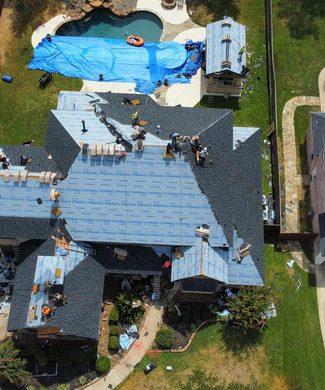
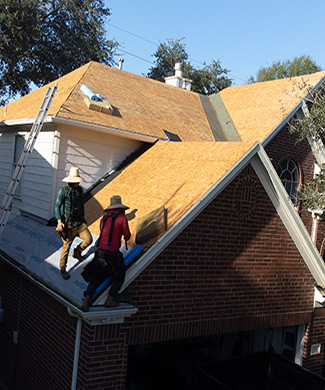
Recent tile projects
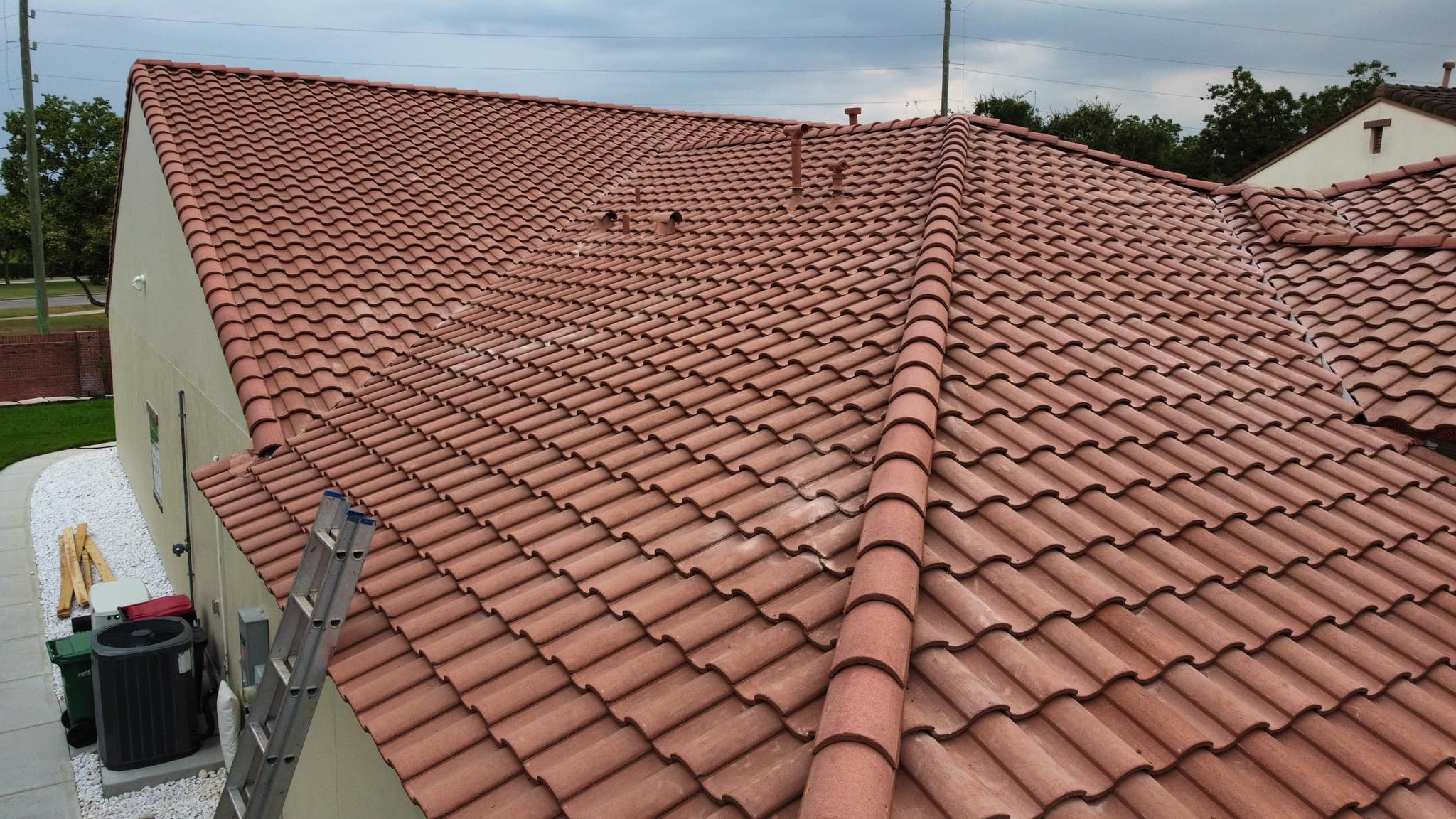
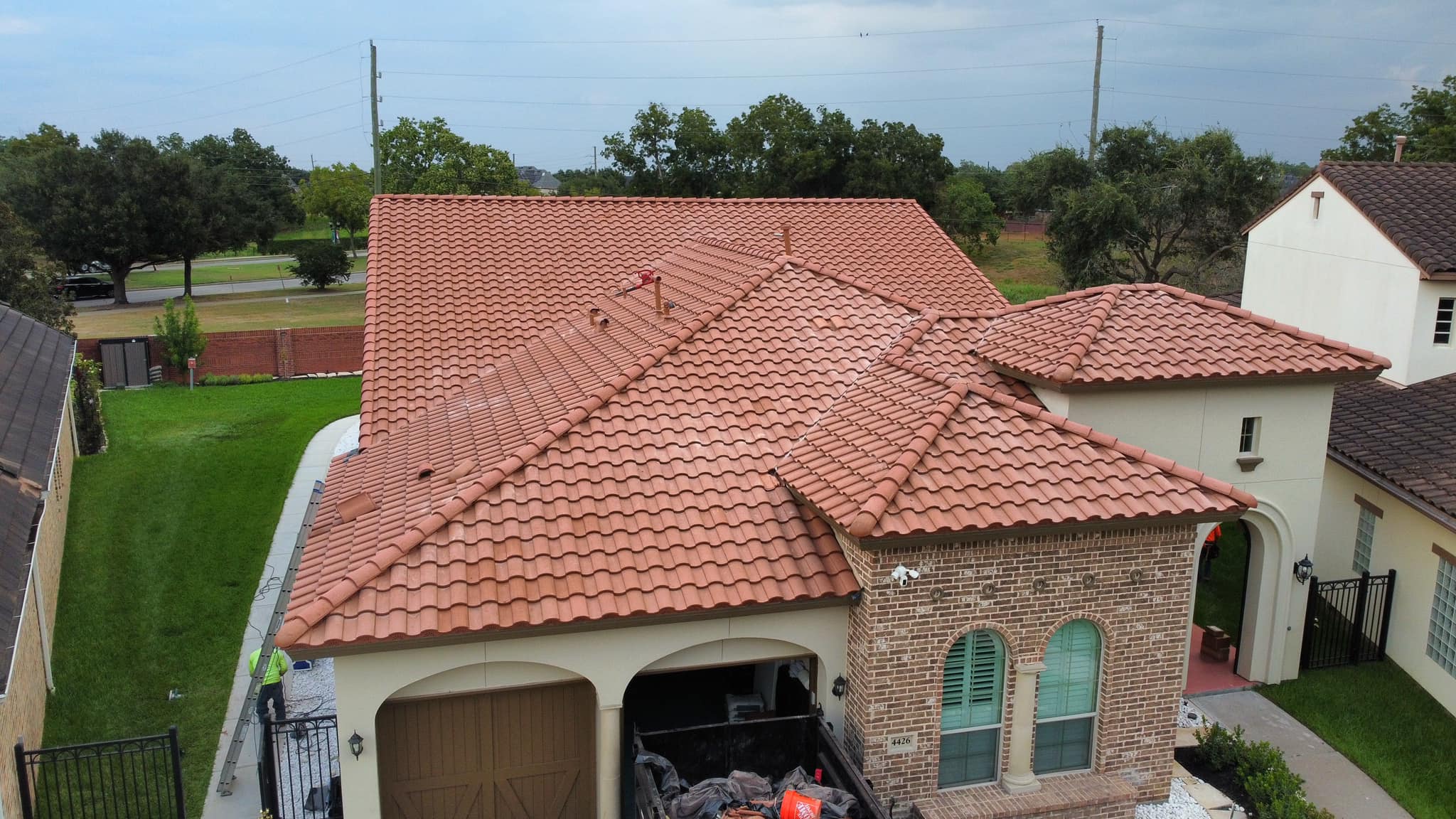
Clay vs. concrete tile
| Clay tile | Concrete tile | |
|---|---|---|
| Look | Rich, natural color that runs all the way through the tile | Many profiles and colors, including flat and slate looks |
| Life | 50 to 100 years | 40 to 50 years |
| Weight | Heavy | Heavier than clay |
| Cost | Higher | Lower |
| Watch for | Can crack if walked on improperly | Surface color can fade over time |
Why tile works in Houston
- Heat. Curved tiles leave an air gap that slows heat moving into the attic.
- Fire resistance. Clay and concrete tile won't burn.
- No rot or insects. Tile doesn't rot and termites can't damage it.
- Wind. When fastened correctly with screws, clips or foam adhesive, tile holds up well in high winds.
Tile roof repair and underlayment replacement
The tiles often outlast what's underneath them. The underlayment below the tile is what actually keeps water out, and it usually wears out after 20 to 30 years. When that happens, the roof doesn't need new tile. We can remove the tiles, install new underlayment and flashing, replace any broken pieces, and relay the original tiles. This is called a lift and relay.
Cracked or slipped tiles should be replaced quickly, since every gap lets sun and water reach the underlayment.
Switching to tile from shingles
Tile is several times heavier than asphalt shingles. If your home was framed for shingles, the roof structure may need to be checked, and possibly reinforced, before tile can go on. We'll tell you up front if that's needed.