Signs of hail damage
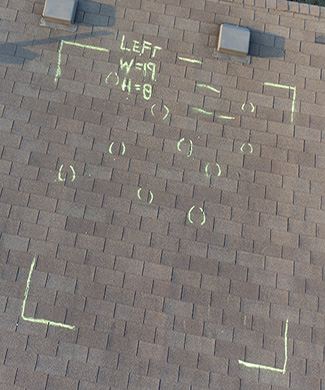
You usually can't see hail hits on shingles from the yard. Look for these clues instead:
- Dents in gutters, downspouts and roof vents
- Dented AC fins or a dented AC cabinet
- Dings on cars, fences, mailboxes or patio furniture
- Granules washing out of the downspouts
- Dark spots on shingles where granules were knocked off
- Cracked or split shingles
Wind damage
Gulf Coast storms and hurricanes bring wind damage too: shingles lifted or creased at the tabs, missing shingles, exposed nail heads, and ridge caps peeled back. Lifted shingles can look fine afterward but no longer seal, which leads to leaks months later.
How the insurance claim process works
- Free inspectionWe get on the roof, check for hail and wind damage, and take photos so you know what you're dealing with before calling your insurer.
- You file the claimIf there's real damage, you open a claim with your insurance company. We'll explain what we found so you can describe it.
- Adjuster inspectionYour insurer sends an adjuster. We can meet them on the roof so nothing gets missed.
- Review the estimateWe go over the insurance estimate with you and flag anything that looks missing.
- Repair or replaceOnce approved, we complete the work. You pay your deductible, and the insurer covers the approved repairs.
About your deductible: Texas law doesn't allow a roofer to waive, pay or rebate your insurance deductible. If a contractor offers to "cover your deductible," that's a red flag.
Don't wait too long
Hail-bruised shingles keep losing granules and break down faster in the sun. Most policies also set a deadline for reporting storm damage, often one year from the date of the storm. Check your policy, and get an inspection soon after any hailstorm.
Upgrade to impact-resistant shingles
If you're replacing a roof after hail, ask about Class 4 impact-resistant shingles (rated under UL 2218). They hold up better to the next storm, and many Texas insurers offer a premium discount for them. Ask your agent what your policy offers.
Watch out for storm chasers
After big storms, out-of-town crews knock on doors. Get a written estimate, make sure the contractor is insured, don't sign anything you don't understand, and never pay in full before the work is done.