Types of metal roofs
| System | What it is | Typical life |
|---|---|---|
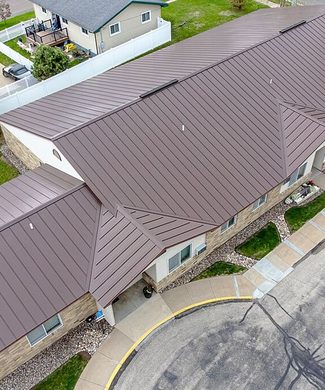
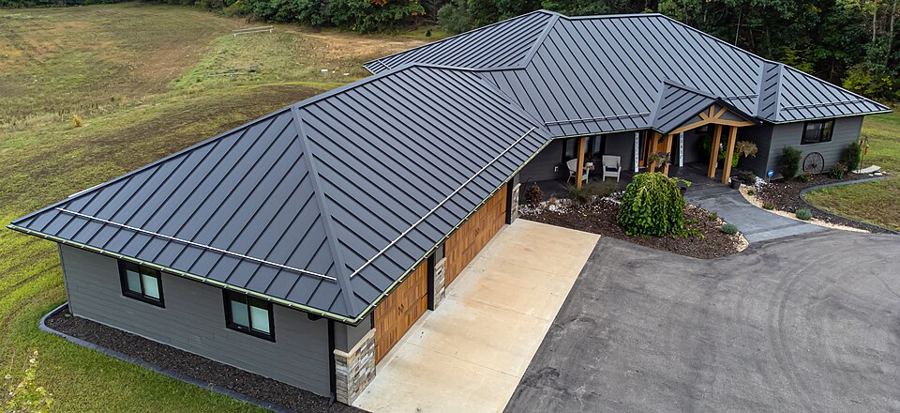
| Standing seam | Panels with raised seams and hidden fasteners. Clean, modern look and very few places for water to get in. | 40 to 70 years |
| Exposed-fastener panel (R-panel, corrugated) | Screwed-down panels. Economical for shops, barns, garages and commercial buildings. Screws and washers need checking over time. | 20 to 40 years |
| Stone-coated steel | Steel shaped and coated to look like shingles or tile. | 40 to 50 years |
Why metal works in Houston
- Wind resistance. Properly installed metal roofs carry some of the highest wind ratings available, which matters during hurricane season.
- Lower cooling bills. Reflective finishes bounce back much of the sun's heat instead of soaking it into the attic.
- Sheds heavy rain. Water runs off fast, and there's nothing for algae or moss to grab onto.
- Long life. Fewer replacements over the life of the home.
- Lightweight and recyclable. Easy on the framing, and the panels can be recycled at the end of their life.
Metal roofing and hail
Large hail can dent metal panels, but a dented panel usually still keeps water out. Impact-rated (Class 4) metal is available, and some insurers offer discounts for it. Note that some policies exclude "cosmetic" dents on metal roofs, so read yours before you choose.
Cost compared to shingles
Metal costs more up front, often two to three times the price of architectural shingles. Because it can last two or three times as long and lowers cooling costs, it's often the cheaper roof if you plan to stay in your home.